Mike Devlin’s Oasis in the Camden Food Desert


Dovecoate,_Vegetable_Garden_and_Fruit_Trees

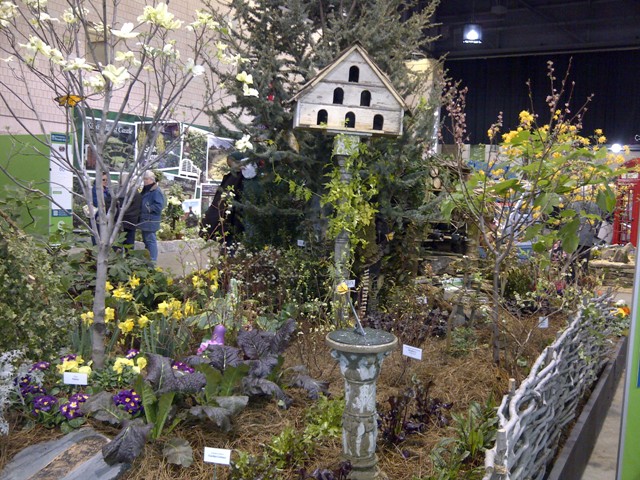
The Camden Children’s Garden’s display at the Philadelphia Flower Show Photo Credit: South Jersey Magazine

A food desert is a place where there is no access to fresh, healthy produce or other foods. There are two types of food deserts in the U.S.  Urban food deserts are low-income areas located in the city that have no access to a grocery store, which sells fresh food within a mile of where someone lives.  In rural food deserts, the area expands to a ten-mile low-access area, which has no retail store with fresh food available. These figures are determined by census tracts.

The USDA states that 23.5 million Americans live in food deserts.  More than half of those are low-income, which also means they may not have readily available transportation to travel to where there is fresh, healthy food. An additional problem lies in the availability of fast food restaurants and convenience stores, which are more readily available, and could be contributing to the obesity and health problems of our country.

To see where these food deserts are located, go to the USDA Food Access Research Atlas.

One of these places is Camden, New Jersey — noted at various times to be the poorest city in the country and/or the most dangerous. It is also noted as being one of the nine worst food deserts in the U.S. There’s one social entrepreneur who has been trying to change that. It’s been a 30-year quest that Mike Devlin has been on to provide Camden residents with fresh produce. And, it looks like things are starting to turn around.

13322880714_e7a9eeb0fc_n

2014 Philadelphia Flower Show Camden Children’s Garden – Photo Credit: Dyogi

Devlin, executive director of Camden City Garden Club, founded the organization in 1985 with his wife Valerie. He has worked tirelessly, turning empty city lots into community gardens so that people can have fresh vegetables.  So far, there are 130 of these gardens throughout the city, and a study by the state of Pennsylvania found that  having produced the equivalent of $2.3 million in food for 2013.

Many offshoots of the Garden Club were born including Camden Children’s Garden, Community Gardening and Greening, Grow Lab, the Community Youth Employment Program, and the mobile market — a truck filled with locally grown fresh produce offered to Camden residents at reasonable prices.
 

There’s More Growing in Toledo than just Lettuce: Sustainable Local Foods

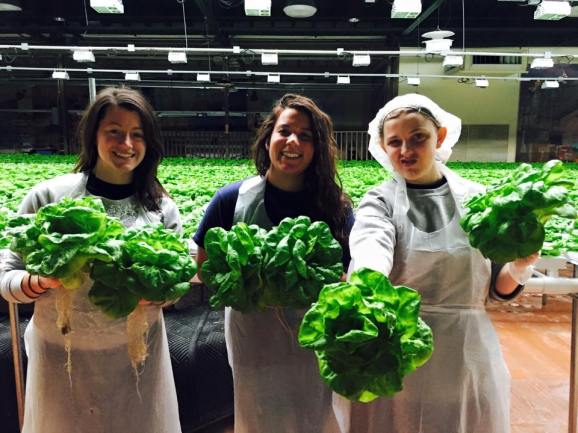
Bloom's Employees

It’s hard to imagine that a country, a little smaller than twice the size of New Jersey, could be the third largest exporter of fruits and vegetables. The Netherlands, United States and France rank as the top three in the agricultural global market. This small but mighty country depends on competing in the world trade marketplace for much of its income; however, the excessive agricultural production was weighing heavily on the side of soil depletion. They had to do something to stay in the game.

These days, research and development of agri-business sustainability are the Dutch government’s main focus. Over half their land mass is used for farmland, plus they are a leader in greenhouse horticulture. Experimentation with greenhouse design has proven favorable for a now-neutral use of energy consumption. Gardening under glass gives more control to the growing environment, saves water and lessens the need for chemical use. This type of food production is important for the Dutch to keep researching because they understand if their citizens eat well, there will be a reduced cost in providing government healthcare.

This food development model is what social entrepreneur Jim Bloom was after in Toledo, Ohio. Working as an employment recruiter, in a previous position, he was able to see a huge niche market in the area that was sorely being missed. With only 179 days of sunshine, Ohio ranks four spots above Anchorage, Alaska with only 150 days a year of sunshine — the least amount for the continental U.S. Because half the year is spent in cloudy weather, 98% of Toledo’s produce is shipped in from as far as 1,800 miles away. At the same time, area unemployment was at 5.7 percent.

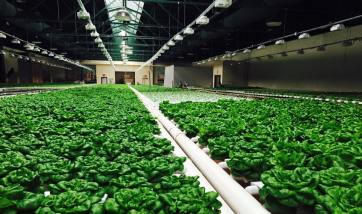
After much research of the European greenhouse models, Bloom started his company, Sustainable Local Foods, with a system of hydroponics. There is no need for sun or soil in this methodBloom's Place, and less water is used than in traditional farming. LED lights cut back on energy use and provide enough light for photosynthesis. The vegetable rows are planted weekly in flat, slightly tilted trays filled with the hydroponic solution. This system will provide year-round lettuce production with between 3,000 – 5,000 heads of organic lettuce per week. Besides a selection of lettuces, the company grows greens, tomatoes, peppers, and herbs.

Since 2012, expansion for the company has been steady with three current locations: Toledo, Columbus, and Detroit, Michigan. Bloom is currently waiting for an answer from Toledo’s commissioner of economic development to move into the abandoneBloom's Lettuced Erie Street Market, located in the warehouse district. In revitalizing the new facility, the community will be able to come in for garden tours. Bloom commented, “In January and February, I’m hoping that people will be able to come in here and enjoy the plants that are growing. There is a mental health benefit to being around growing living things in the dead of winter.” The idea behind this is to strengthen community bonds, revitalize the downtown warehouse area, and people will be able to see where the salad came from that they had last night. The produce is being distributed in area markets and local restaurants. If the company keeps blossoming, there is hope to expand across the Midwest.

When asked if he had gone to college before he started this venture, Bloom said, “Sure, I did. But, there was nothing in college that I took pertaining to agriculture. I knew nothing about agriculture. My background is in education and vocational rehabilitation. I wanted to start this business because of the economy here. I wanted to bring some life into the area and provide jobs for the people here. And, it is taking off exponentially. I wasn’t expecting that. Just about every week someone calls to ask me when I can come to set up in their neighborhood.”

Besides growing healthful local produce year-round in a sustainable environment, bringing community together in a revitalized downtown area, and providing grocery stores and restaurants with thriving organic produce, Bloom hopes this expansion will provide many more jobs for more of the out-of-work Toledo residents.

You can check out the company at their Facebook site.

Excerpt: Lyla and Bel’s 4th of July

The Best Place – the story of two women who grew up in Marquette’s Holy Family Orphanage and their lifelong friendship.

So on the Fourth of July, Bel comes over for breakfast, and I have to admit she tries really hard. I tell her when she gets there that I’m making scrambled eggs, but she says, “No, that ain’t festive enough for the Fourth of July.” Then she sticks in a video of this silly musical called 1776 that has that bad film look like most of those movies made in the ’60s and ’70s. And it seems like it’s all about Thomas Jefferson’s sex life from what little bit of it I actually pay attention to—and she tells me just to sit there and have my coffee and enjoy myself while she makes pancakes. So I says, “Okay,” to make her happy, and I drink two cups of coffee and pretend to watch half the movie, and I’m just about ready to keel over from hunger when she finally tells me she’s done.

So I drag myself out of the chair and go over to the table and I think, “What the hell did she bake a cake for?” Only, it’s not a cake. It’s a stack of pancakes, and she’s covered the top one in strawberry and blueberry jam and whipping cream so it looks all red, white, and blue, and then she’s got a little American flag on a toothpick attached to it. “I wanted to put in a sparkler,” she says, “but I was afraid it would set off the fire alarm, and I didn’t think we’d use a whole box of them—they don’t sell them separately,” she says.

“It’s pretty, Bel,” I says, “but I don’t like whipping cream, you know.”

“That’s okay. I’ll eat the top one—oh, I forgot the candle I bought to replace the sparkler.”

And then she grabs two giant birthday candles off the cupboard of the numbers “7” and “6.” They’re the same ones she used for my birthday cake last year.

“What’s that for?” I asks.

“It’s America’s birthday today,” she says. “It’s the Spirit of ’76. Don’t you remember that from history class?”

I remember birthday cakes have candles to represent a person’s age, not the year they were born, but I s’pose she couldn’t do the math to figure it out—two hundred and…and…twenty-nine it would be—2005 minus 1776.

“Let’s eat,” I says, but first I have to use the bathroom from drinking all that coffee while I waited.

I go in the bathroom and sit down, and can’t help laughing to myself about the pancakes covered in jam with “76” sticking out of them. That’d be one to take a picture of if my Kodak disc camera hadn’t broken. I haven’t bought a new one—those new digital things are just too expensive as far as I’m concerned. And I don’t have a computer to read them on.

Well, we have a nice breakfast. I eat far more pancakes than I normally would, but Bel says we need to eat extra to keep up our strength for walking to the parade. It’s on Washington Street, just two blocks from Snowberry, but whatever.

After breakfast, I wash up the dishes while she watches the rest of 1776. For the rest of the day, I’ll hear her humming that song about Jefferson playing the violin.

“We can watch Yankee Doodle Dandy tonight, Lyla,” she says.

“Great,” I think, but I just says, “Okay.” Maybe I’ll be lucky and fall asleep by then.

“While we wait for the fireworks,” she says.

I’d forgotten about the fireworks, but I can see them great where they shoot them off over the old ore dock right from my window. It’s one of the few advantages of living high up in a skyscraper—well, at least the closest thing to a skyscraper that Marquette’s got.

When it’s time for the parade, we . . . (Read the rest of this section here.)