Courage, Happiness, and Resilience

“What gives you your resilience, Diane?” my friend from Minnesota asks me quite frequently.  I never know what answer he is searching for.  I never know what will scratch that itch he has.

“What do you mean, Gary?”

“You have not had an easy life, yet you continue to bounce back–time and time again.  How do you do it?”

That is too big of a question for me.  Yet, my mind races back to the accident that leaves me stuck in bed–day after day.  The driver’s seat was ripped off its bolts; I was thrown into the backseat, shaking uncontrollably, while still attached to the driver’s seat.  The windows all around were gone.  The rear end smashed beyond repair by that truck loaded down with 35 appliances.

“Don’t drive that truck when you’re overloaded,” the boss told the driver a couple of days before the impact. “The brakes won’t hold.”

If it weren’t for the heavy generator in the back of the Cavalier, my seat would have flown into the grill of the truck–I’d be dead, instead of pondering my friend’s question.  That was almost twenty years ago.

“Di, how do you keep getting back up and have such a happy attitude about it?  Many people would fall down/give up and realize they had nothing left for them because their old life was gone,” he continued.

Thoughts of those nightmare years of lawsuits flooded my brain.  Then, after the lawyers took their share, the doctors’ theirs’, I was left with only a pittance to buy a little place in the country out of that $250,000 I was awarded.

I moved to the forest in a little cottage with a lovely meditation brook, with no one to bother me.  Finally, I had peace.  The most glorious peace I had ever felt in my life.  Sure, I was broken from the accident.  Sure, I was struggling to come back after a head injury (the second one).  And, the next ten years left me with an unidentifiable illness which only added more disability to the disability I had already incurred.

But, I had peace, silence, nature, animals who thought I could walk on water–even on the days I could barely crawl out of bed.  There was time to think. . . . Time to dream. . . . And time to find that hope again, that I had lost so long ago.  Oprah and Eckhart Tolle taught me how to be happy.  I practiced that every day–every single day.  I focused on the rich, vibrant colors of the flowers of spring and summer, the fresh air, the butterflies, and birds. My animals would do something goofy, and as soon as I caught myself laughing, I laughed harder, I laughed longer, and I would laugh so hard–had I been around anyone else, they would have thought me to be barking mad.  I learned to grow those chemicals in my brain that needed so much care and nurturing to thrive.  Negative thoughts would hit–some days hard, really hard.  In my brain, I’d be screaming STOP IT!  I’d scream until all I heard was the screaming, and . . . the thoughts would fade away.  It became easier then.  When those old, tired tapes of the horrors of my life would start up and play, I’d listen, and then ignore them–focus on something different, brighter, happier.

I found Long Ridge Writers Group online–a school to teach me how to write for magazines and journals.  They gave me as much time as I needed to finish the course, “Breaking into Print.”  Still not sated, an online search led me to Southern New Hampshire University, which has the best writing program in the country. That was the best decision of my life.  My brain is stronger, clearer, and my confidence has returned.  I’m no longer a person on disability with no goals/no ambitions.  I’m a person with a wonderful future ahead of me.  I’m a writer.  I have a lovely cottage in the country.  I have animals who love me beyond anything else in life.

Sure, I can’t stand or sit for long periods, I don’t look the same, my personality has changed, and my house is an absolutely disaster of clutter that can’t be tamed, but push those negatives aside, and I have the whole world open to me–a whole wonderful world of possibilities that I call resilience.

–END–

The SharpBrains Guide to Brain Fitness

SharpBrainsGuide_3D_highreThe reason I wanted to read and review this book is that brain science is a very important subject to me.  I’ve had three serious jolts to my head, all were life altering.  Brain science is still a subject that needs a lot more study and investigation in my opinion.  The brain goes through so many changes in a lifetime: car accidents, sports accidents, kids falling down hitting their heads, hormonal changes, diet, old age . . . it’s a wonder we survive all of this trauma.  The big problem is that when these injuries occur, most people don’t realize any damage has been done.  They just know that people suddenly are reacting differently to them, they can’t do math any longer, they lose control of their spending habits, engage in risky behavior, or they can’t perform as well as they were able to before.

That is why this company is so important to all of us.  They’ve been tracking brain health and neuroscience research since 2005.  They’ve gathered a lot of information from the top scientists around the globe to make us more aware of how to take care of our minds—to make us wiser in how to change our brains and gain the specific function we have lost over the years.

The book is divided into nine chapters.  Eight of the chapters include interviews from some of the top brain scientists from around the world.  Over 100 brain researchers have contributed to this volume providing invaluable information on the subject.

In chapter one, “Start with the Brain in Mind,” the text goes into detail about how the brain functions with a focus on memory, attention, emotions, perception, motor skills, visual and spatial processing, and executive functions.  The explanations give real-life examples, so that a person can easily relate to the different areas of function. Neurons are clearly explained, areas of the brain and functions, like memory, attention, etc., are lightly touched upon. Neuroplasticity is explained and how to improve learning capabilities.

In chapter two, “Be a Coach, not a Patient,” some of the advancements in brain health are brought to light.  There is a breakdown of a survey taken about what the average person is most concerned with in their brain health.  Various new studies are examined and explained, plus a few tips that are theorized to help cognition.

In chapter three, “Mens Sana In Corpore Sano,” physical exercise is examined in detail — new studies that show the benefits to the brain through exercise and how it can slow the progression of brain atrophy as we grow older.

In chapter four, “You Are What You Eat and Drink (Up to a Point),” as the chapter title reveals, there is much talk about diet and how it effects the brain.  Further discussion is included on antioxidants, supplements, caffeine and alcohol, diabetes and smoking, and how obesity affects the brain. (We all better get on those diets now!)

In chapter five, “Oh, the Places You’ll Go,” different types of mental activity are mentioned and the importance of continuing to learn new information.  Crossword puzzles are discussed and why they aren’t enough, and how they lose value over time. Another important subject is brought up: how to delay the onset of Alzheimer’s, and the importance of lifelong learning to buy more time. What education, board games, and playing cards have in common. And, a few video games are highlighted as helping various brain functions.

In chapter six, “Oh, the People You’ll Meet,” explains the importance of brain health and social relationships.  The more social connections one has the healthier the brain is.

In chapter seven, “Manage Stress, Build Resilience,” There is good stress and bad stress. Chronic stress causes serious changes in the body chemicals and the brain.  A section of lifestyle adjustments are suggested with highlights on the benefits of the various options listed.  At the end of this chapter is a long section with many specialists explaining the effects of stress and the changes we can make to improve our brains and bodies.

In chapter eight, “Cross-train Your Brain,”  Brain training is explained in detail and how to get the most from the training you choose, as well as  brain training games, biofeedback, cognitive behavioral training, and a SharpBrains recommendation on the top brain training programs.

In chapter nine, “How to Be Your Own Brain Fitness Coach,” is a chapter to put everything in the book into a workable plan.  There are personal stories explaining how various people can deal with improving their brains and life in general.

Overall, “The SmartBrains Guide to Brain Fitness” is full of valuable information.  Whether you want to target a specific area in your life or whether you want to just tune-up the whole brain-body connection, this book has so much to offer.  It takes complex principles and puts them in simple language that is easy to understand, and it offers a deep understanding of how our brains work, and what we can do to make it better—even as we age.  This is a must-read for anyone concerned about their brain health.

I told someone that I would let them read this book when I am finished with it.  I don’t want to let this go now.  I think I’ll buy them a copy of their own.

I’d like to thank the authors for this complimentary copy in exchange for an honest review.

We Care Solar

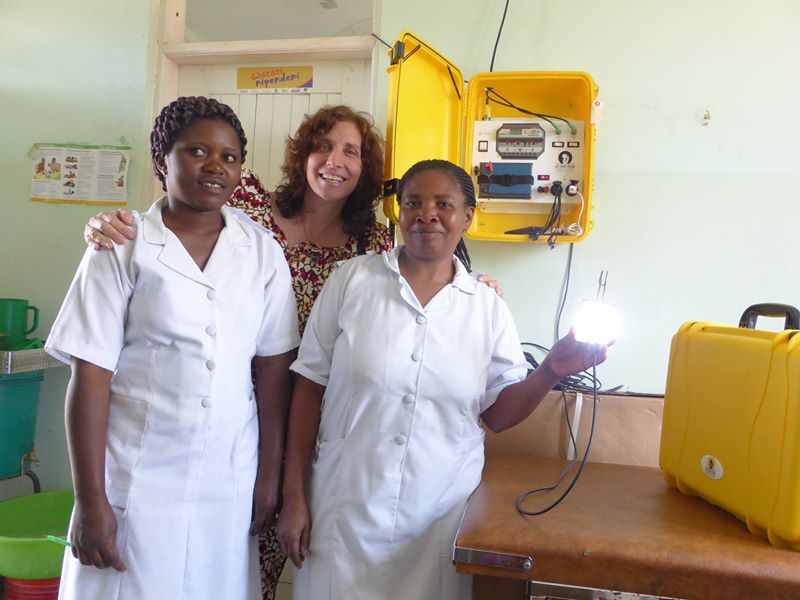
We Care SolarIn 2008, Dr. Laura Stachel visited northern Nigeria on a research trip to study maternal mortality in a state hospital. She found that the conditions in northern Nigeria were challenging to say the least. Women were 70 times more likely to die than in the U.S. from complications due to health problems and lack of adequate supplies and equipment.

One of the most attention-grabbing situations, in the hospital she was visiting, was the lack of reliable lighting due to sporadic electricity. Electricity in the main hospital was available no more than 12 hours a day, and there was no guarantee that it would stay on that long. If a woman was giving birth at night, many times there was little to no light at all to deliver the babies. A cesarean section would have to wait until morning or be performed by flashlight; deliveries were performed . . . (Read Full Article)

Dennis Cardiff

dennis2116x158b

Author Dennis Cardiff lives in Ottawa, Canada, with his wife, two sons and two stepsons. Working in the mailroom of an international law firm allows a lot of free time for him to write and do research on the Internet.

An artist of many talents, Cardiff has been a professional portrait painter since 1972. He studied art at the Ontario College of Art, University of Saskatchewan and the University of Ottawa. As a writer, his poetry has been published in the Sheaf, the University of Saskatchewan’s newspaper, the Writing.com Anthology and an online poetry magazine, Shadowlands Express. His recent book “Gotta Find a Home: Conversations with Street People” (book 1 of 4) was published by Karenzo Media. Books 2 and 3 are currently at tGotta Find a Home 7658782he publishers, and the 4th book of the series will be available in January 2015.

Have you always written?
In school, I always wrote extensive notes in class. I especially enjoyed subjects where I was required to do illustrations, maps or diagrams. At exam time, I could recall entire pages from my notes, especially in history.

In grade eight, I won a city-wide essay contest sponsored by the . . . (Read Full Article)


EDITING RATES

I prefer working with a flat-rate fee.  There’s only one charge for the first edit.  All edits after that are no charge, unless more than 500 words are added or changed.  Then it is $0.03 a word.

Hourly work is $40.00 an hour, and the same rules apply.

You can find my profile at upwork.com/freelancers/dianewalters4.  

Please e-mail me at dianewalters-writer@outlook.com for questions or more information.

One Man’s Fight to Save Little Girls

There is a place in Southeast Asia where three countries join their borders to make a very scary place — especially to little girls. The Golden Triangle joins Thailand,Wikipedia Prostitution of Children Laos and Burma — an area once renown for the world’s production of opium. In the past 30 years, the drug trade has dwindled, but crime in the area has not. With 367,000 square miles, large sections have zero law enforcement making this a perfect haven for criminal activity. In Thailand, it is estimated that 25 percent of the economy is based on child prostitution. With that much money at stake, the child sex trade is lively, full of dangerous people trying to get their share of the take.

Families living in the small towns and villages are often surviving in extreme poverty. Loan sharks are readily available to lend a hand in tight circumstances. This financial arrangement can go awry very easily, so much so that even the thought of selling off the daughters closest to puberty is done on a regular basis in order to keep trouble at bay. The social stigma is that children are born to work. Working in retail, a factory or a brothel is equated … (Read the Full Story)

The Empowerment Plan

The Empowerment Plan 3

A woman came out of the shelter that I was in, and she was yelling at me — she was full-on screaming, ‘We don’t need coats! Coats are pointless! We need jobs!’”

This is how social entrepreneur Veronika Scott’s dream job was born. It started in a class she was taking in college. The project was to design something that would fulfill a need. Scott did her research at homeless shelters, and came up with a unique coat design that would turn into a fully utilized sleeping bag. It looks like a regular coat. The bThe Empowerment Plan 2ack of the coat unfolds to open up the bottom half of the sleeping bag through Velcro enclosures. When the coat isn’t in use, it folds up into a bag. For the 20,000 Detroit homeless, she thought this was a great idea.

“Really, she was completely right,” Scott posits about the angry woman at the shelter, “because a coat is just a Band-Aid for a systemic issue. And, what really would make a difference is hiring a population that would need them in the first place.”

That’s was Scott did. She hired homeless single mothers. In her startup phase, there were plenty of naysayers with discouraging The Empowerment Planstatements that homeless people will never be able to work a normal job. Scott found that to be so untrue. The women they’ve hired at The Empowerment Plan have proven to be excellent employees and many have managed to … (Read the Full Story)

Catching Water in Sand

A simple technology that can save millions of gallons of water in areas that are parched and barren for most of the year is what captured Simon Maddrell’s hWikipedia Buidling Sand Damseart. He left the corporate world in search of a way to help people — who sometimes had to walk 12 hours a day to find enough water to make one meal. Meanwhile, the younger children would be left at home without schooling, and the livestock were uncared for during these absences. The land area would be almost useless for agricultural purposes because of the arid conditions.

In 1984, Maddrell met Joshua Mukusya whose passion and desire to find a way to have access to clean water for himself and his neighbors, started an investigation into techniques used during the colonial period, which slowed down water flow. Noticing how much green vegetation those areas had, he started working on plans to enlarge … (Read The Full Story).

Sneak Peak at Deborah Heal’s New Book

My latest book is on a sad topic–the Cherokee Trail of Tears–but that’s not to say there aren’t moments of levity. Here Merri and our old friends Abby and John are preparing for an all-night “time-surfing” session in an empty apartment they may have sneaked into without permission:

Faint noises came from the hall. Merri and Abby started then looked at each other, wide-eyed. Someone knocked softly on the door, and a smile bloomed on Abby’s face. “It’s our secret knock,” she explained as she race-walked to the door.

“Of course you and John have a secret knock,” Merri said, rolling her eyes. “Doesn’t everyone?”

John came in loaded down with plastic shopping bags. How he managed to lug it all up without being seen was a mystery they didn’t take time to discuss.

“Wow, it’s dark in here,” he said, setting the bags on the kitchen counter. “I forgot to warn you about not turning on lights until I got something to cover the window.”

“And yet the little women managed to think of it themselves,” Merri said. “Amazing.”

John grinned and tugged at her hair. “Oh, stop, Merri Christmas. You know I respect your ginormous brain.”

“What’s all this?” Abby ignored them and began snooping through the bags. “You must have bought out the store.”

“It’s amazing what you can find at a Dollar Store. Did you know they have blankets there?” Out of the largest bag on the counter he removed a green blanket in a zippered vinyl case and held it for them to see. “It’s thin and wimpy, but it should work to cover said window.”

“What else?” Merri said, unable to tamp down her curiosity.

“These,” John said, handing Abby three flashlights. “Even with the windows covered we should keep the light to a minimum.” He handed a writing tablet and pen to Merri. “Because I couldn’t remember if you still have yours in your backpack. Toothpaste and brushes, as requested, and soap and paper towels as an added bonus.”

“I’m all in favor of good hygiene,” Abby said.

“One thing I’ve always admired about you, my dear,” John said. “Here are mixed nuts and cheese crackers in case we get hungry later. Bottled water because…well, you just never know, do you? And coffee—with sugar, my love—so we can stay awake.”

Grinning, Abby took the coffee from him. “My hero.”

“Instant?” Merri said without bothering to keep the disgust from her voice.

“What was I thinking? I’ll go back and buy a coffee maker. Maybe a waffle maker would be nice.”

“Don’t get your knickers in a twist,” Merri said. “But what about cups?”

“Oh, ye of little faith,” he said and pulled three ceramic mugs out. “And last, but certainly not least, breakfast.” He opened the last bag, a white paper one in which Merri glimpsed three jelly donuts. “Unless you think we should eat them now before they get any staler.”

Abby took the bag from him, closed it firmly, and put it on the counter.

“Now,” John said. “Tell me what I missed while I was out foraging.”

Exciting News from Author Tanyo Ravicz

Hello Everybody,

I wanted to let you know that my books Alaskans: Stories and A Man of His Village are out in their new Denali Press print and eBook editions. Details at www.denalibooks.com or www.tanyo.net.

KOBO (www.kobobooks.com) is having a 30% off summer sale on all their eBooks until Monday, July 28, 2014. This includes my eBooks, which are available at Kobo (as well as Amazon, etc.).

Readers who use Apple e-readers and are interested in posting a review of either of my books at iTunes can have a promo code for a free copy of either eBook — Please contact me at www.tanyo.net.

Also, a recent TR author interview will be posted starting next week on July 28, 2014 at www.49writers.blogspot.com and www.selfmadewriter.blogspot.com.

Thank you for your interest, and feel free to contact me if you have any questions.

Best wishes,

Tanyo

tanyo@tanyo.net

runningfoxbooks.com