
Don’t Waste Another Drop

BASE #2 CYBER-RAIN PHOTO 2

Cyber Rain

Water is creeping up the worry-ladder of environmental problems that need to be dealt with around the world. In drier climates, here in the US, water is a precious resource. California is a state that best knows about water shortages with water piped in from Northern California and the Colorado River. When the average household uses about 300 gallons of water a day—and much more for the drier, hotter climate —this is a serious concern, especially, when we know that only 1 percent of the world’s water can be used for our needs. The rest of the 99 percent is frozen in glaciers or is salt water in the oceans. Some might argue that the rain and snow replenishes the earth’s watershed, but there is no guarantee where or when that water will fall, leaving us with floods or droughts throughout the year.

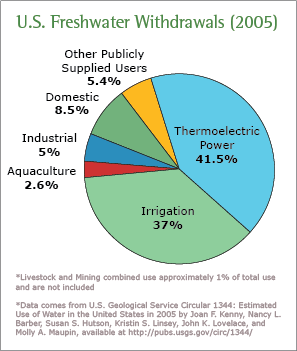
The EPA shows us that 37 percent of that precious 1 percent goes to irrigation. It was that 37 percent that concerned, California epa-cyber rainresident, Reza Pourzia as he drove through his neighborhood in the mornings. Every day, those beautiful, lush green lawns, and gardens were being watered by automatic sprinkler systems—come rain or shine. It really bothered him that in a place that was so desperate for fresh water that people’s yards were being drowned, well past the point of saturation, until the overflow was running down the street, filling it with fertilizers and pesticides.
Driving past people’s homes with those automatic watering systems, ready to spring to action the very second that timer hit its mark, drove him to distraction. There had to be a way around the problem, but even he realized what a pain in the neck it was to reset those timers. This, of course, would prove to be an impossible task unless you knew when the weather would change. People had jobs, kids needed to be chauffeured to here and there, errands … they couldn’t sit home to wait to see what the daily weather changes were. This nagged and niggled around in the back of his mind each day. And, this was the defining period that Reza Pourzia became a social entrepreneur.

All that thought paid off as soon as wireless technology came into play. Pourzia realized that if he hooked up the sprinkler system to a computer program that the whole wasted water problem would be solved directly from the weather stations. The benefits from this idea were thrilling—lower water bills for the homeowner, less water being wasted in the environment, and less money spent on fertilizers and pesticides that had been washed away down the street gutters. The latter, of course, is also much better for everyone’s health and the environment. And finally, there would be no need to reset timers. It was such an exciting idea that Pourzia quit his consulting job and went to work putting his plan into action. Thus, in 2005, Cyber Rain was born.

The controller that Pourzia developed, to control the flow of water being used daily, is simple to use. The module plugs into your home wireless network. The old sprinkler timer is replaced with this new one. The device connects to the weather service and water use can be adjusted to the amount of humidity or rain on any given day, and it can even be adjusted for slopes or hills.  The software alerts you when a sprinkler head breaks, and can even tell you when it’s time to fertilize your lawn again. The Cyber Rain Cloud allows you to operate the system from anywhere, even your iPhone.

It’s estimated that Cyber Rain will save between 40 to 60 percent of household water usage per year. It is a perfect idea for commercial use as well for schools, parks, municipalities, golf courses. They are the first smart-irrigation product to be certified by the EPA’s Watersense. They have also passed the SWAT certification by the Center of Irrigation Technology. Many states are offering rebates of up to $1,000 to get people to conserve water with this new technology.

Creating Treasures Out of Trash

All it takes is a dream to accomplish great things in life. That dream started in Lorna Rutto when as a young girl in Kenya, the piles of plastic litter everywhere annoyed and disgusted her. She wanted to find a way to clean it up. Experimenting with melting the plastic brought two things to light: she saw that it was possible for plastic to take another shape—a smaller, more condensed form; she also was able to bring in a small amount of money from the jewelry she made from the fun, new shapes she created.

At graduation, life’s responsibilities took the forefront in Rutto’s visions for her future, and she decided on a career in banking. This brought stability to her new life as a young adult, but she was kept from the things she loved: people, creativity and environmental science. In 2009, Rutto quit her job and with business partner Charles Kalama started EcoPost—a company that makes plastic posts and poles by simple injection molding.

Positive energy is contagious in this social entrepreneur. She has enhanced her community by providing jobs for hundreds of people. These people are needed to collect the 40 tons of plastic waste that EcoPost uses every month. This is a vitally important service to the women of Nairobi and at-risk youth, who normally would not have a reasonable means to make money. Many of these freelance employees have started their own waste collection businesses, hiring other people to collect these plastics, thus, creating more jobs.

The business already has more contracts than it can keep up with from ranches and game reserves. Plastic fence posts are more popular than timber because they are stable, won’t deteriorate, and there is a much less likely chance of them being stolen for sale on the black market. Available timber is dwindling in Africa from deforestation, and this is one of Rutto’s prime goals in her eco-dream—to stop logging before there are no more trees. Expansion across Kenya is the next step for this growing company, as well as plans for other products that could be used in place of timber, such as support beams, roofing trusses and floor tiles.

Forbes named this superstar in their “20 Youngest Power Women in Africa, 2012.”  In addition, she has won numerous awards for her innovative company and dedication to cleaning up the environment. One of these included the Cartier Women’s Initiative Award, in 2011. This included business mentorship for a year and $20,000. The money bought a much-needed company truck, and several waste collection sites were established in her community to facilitate the rapid growth of EcoPost.

A simple dream that started from a girl who had no job, no investment money—nothing, but a pile of trash and her desire to save trees and clean up her community. Lorna Rutto is a perfect example of how to be a social entrepreneur. Like Lorna, everyone has dreams. Everyone has potential to make an important change in the world, to make our world a better place.

Remembering the Father of Social Entrepreneurship

Just eight months after SNHU’s interview with the father of social entrepreneurship, James Gregory Dees passed away from respiratory failure December 20, 2013.  Professor and co-founder of Duke University’s Center for the Advancement of Social Entrepreneurship, Dees contributed more than 60 cases, authored or co-authored over 100 articles, and co-authored two books.

A little over a decade ago, the topic of social entrepreneurship was hardly considered mainstream.  With a fresh, new approach to tackling tough world in life, social entrepreneurship has become the niche everyone is looking toward for solutions to these challenges.  Major businesses, newspapers, universities all have this common goal—innovative change—simple ideas that bring about concrete resolutions that will change people’s lives, change communities and change the world.  It’s an exciting time for new ideas in this second decade of the new millennium.

The media has caught the wave of enthusiasm, and CNN is posting a series on people who develop and implement plans of change, such as Andrea Coleman and her husband Barry Coleman who mortgaged their house to bring Riders for Health to Somalia to solve some of the health care problems there.  NPR has its own series, Social Entrepreneurs: Taking on World Problems, and they even have podcasts available.  Forbes offers tips to aspiring social entrepreneurs and other articles.  PBS, Huffington Post, The Guardian—the list is exhaustive when you want learn about the people involved in this exciting new field.

Dees shared his passion and his vision with all of us.  He gave to us a legacy of his ambition and foresight to solve the challenging puzzles of the world’s problems.  He ignited a spark in us and started a new revolution of change–one with promise, hope, and desire to make a better world around us.  Dr. Dees was indeed the ultimate example of a social entrepreneur.  He will be fondly remembered.

Medic Mobile – How Josh Nesbit is Changing Healthcare

Josh Nesbit

Photo Credit: Kris Krüg, Flicker

In the early hours or February 20, 2009, John Nesbit penned the mission statement for his company Medic Mobile.  He was 21 years old.  Forbes named him as one of the top 30 social entrepreneurs in 2012—he was the youngest of the group.

When many young adults are thinking their next steps after graduating college, Nesbit was setting out to change healthcare in Africa.  What was his motivation?  He met Dixon, a community-health volunteer, who was walking as much as 35 miles a week to update the medical files of patients in the area for the local doctor.  Many diseases went untreated because the travel to each patient was so vast that it would take a full month to return to the clinic to report the findings. There are so few doctors, in this part of Africa, that they can have up to 100,000 people each in their health community.

During dinner with Dixon one night, Nesbit looked down at his cell phone and saw he had all six bars filled up.  The cell strength was better in Africa than back at home in San Francisco.  That was the spark—the dawning moment—that all social entrepreneurs get when their new ideas come to light.  It was so obvious . . . if these health workers had a cell phone, there would be no more trekking the 35 miles every week.

Medic Mobile has equipped these community-health workers with inexpensive mobile phones run on small solar panels.  Each worker has 100 homes to monitor and send information back to the doctor.  Nesbit calls this a “hub-and-spoke” model of simple healthcare.  Having cell phones in Malawi and Kenya, they have found they can track infectious diseases 134 times faster than before.  Instead of hearing about a measles’ outbreak in two weeks, they can report it in 15 minutes.

Hope Phones is another company that Josh Nesbit started to provide low-cost phones to the people in this outreach program, as well as keeping older phones, that are no longer used, out of our landfills.

In addition to being named in Forbes’ 30 Top Social Entrepreneurs, he was also selected by Devex (the world’s largest community of aid & development professionals), for their 40 under 40 awards, and has received the Truman Award for Innovation from the Society of International Development.